


A GAME CHANGER FOR FAMILIES
How the school district is building a stronger start for young learners through Universal Pre-K
By Amy Lynn-Cramer

There is something magical about a preschool classroom. Paint is still drying on yesterday’s masterpiece. A child proudly zips a jacket for the very first time. A tower of wooden blocks teeters before tumbling to the floor, sending giggles across the room.
To the casual observer, it may look like children are simply playing. The educators who spend their days in these classrooms know something else is happening.
“This is where life’s most important lessons – how to share, solve problems, ask questions and regulate emotions – take shape,” says Dana Kearney, CEO and founder of Village Babies Development Center in South Orange. “Those first experiences matter more than many people realize.”
Leroy Johnson III, director of early childhood education for the School District of South Orange and Maplewood, has spent nearly two decades in early childhood education. However, he did not intend to become one of the region’s strongest advocates for preschool. “I started out as a substitute teacher and found an opportunity to teach preschool,” Johnson says. “I was so full. Just seeing the growth in students – even from day to day, being more confident walking through the door, watching tears turn into smiles – reminded me why I wanted to do this work.”
Johnson leads Universal Pre-K for the district, helping hundreds of children begin their educational journey each year. He can talk about enrollment, funding and partnerships, but the conversation inevitably circles back to the children. “This has been my life’s work,” he says.
Johnson joined the district in 2019. He believes the earliest years of education lay the foundation for everything that follows. “The work doesn’t end when children leave preschool. It’s just the beginning,” he says.
One moment, in particular, has stayed with him. The very first preschool student Johnson ever taught recently graduated from high school.
“I was invited to their graduation,” he says. “When I tell you it touched my heart tremendously, it reminded me why I do what I do. You don’t always get to see the long-term impact of this work, but when you do, it’s incredibly rewarding.”
Universal Pre-K has been steadily expanding in Maplewood and South Orange since the district opened its flagship Montrose Early Childhood Center in 2015. What began with 61 preschool students at the center accelerated after the district secured New Jersey’s Preschool Education Expansion Aid in 2018, paving the way for today’s districtwide Universal Pre-K program.
Now nearly 500 children ages 3 and 4 participate in the district’s free Universal Pre-K program each year, reflecting the program’s continued growth and the strong demand from local families.
During the past decade, the school district has significantly expanded its Universal Pre-K program. Rather than building new schools, the district has partnered with local childcare providers.
“For families, the partnership model creates more opportunities to access high-quality preschool throughout Maplewood and South Orange,” Johnson says. “For providers, it means opening their doors to a new model of public education, one that blends district oversight with decades of community experience.”
Dana Kearney wasn’t immediately convinced it was the right fit for Village Babies Development Center. “When district leaders first approached me about becoming a Universal Pre-K partner, I politely declined,” she says.
But over time, she began noticing something she couldn’t ignore. “Families weren’t leaving because they were dissatisfied with Village Babies,” Kearney says. “They were leaving because they wanted access to the district’s free Universal Pre-K program.”
The changes and the opportunity to become part of a larger community effort shifted her perspective. “I took a leap of faith,” she says.
Village Babies, one of the school district’s nine Universal Pre-K partners, now operates two district-funded preschool classrooms alongside its private early childhood program.
“The leap, however, came with a steep learning curve,” Kearney says. “Running a private childcare center regulated by the Department of Health while simultaneously operating district-funded classrooms governed by the Department of Education meant learning an entirely new way of doing business. It was like driving a car while building it.”
The transition required far more than opening new classrooms. “There were new reporting requirements, separate financial systems, different staffing models, calendars and expectations,” she says. “There were days when it felt like two separate organizations operating under one roof.”
Yet the challenges began giving way to unexpected rewards. “The teachers embraced new opportunities for professional development,” Kearney says. “Universal Pre-K’s requirements for certified educators, smaller class sizes and evidence-based curriculum raised the bar not only for the district-funded classrooms but throughout our center.”
Three years later, Kearney speaks less about compliance and more about impact. “My teachers on the private side now want to do Tools of the Mind,” she says, referring to the state-approved, research-based curriculum used in the district’s Universal Pre-K classrooms. “It’s been a win for the children.”
With all the operational changes and professional development, Kearney says the definition of success has always been the same. “I’ve never measured kindergarten readiness by how many letters a child can identify or how high they can count,” she says. “It’s learning how to be part of a classroom, how to ask for help and how to work through disappointment. Those are the skills that become the foundation for everything that follows.”
Years after saying “no,” Kearney has a very different perspective. What she once viewed as a risk has become another way to strengthen Village Babies and the children and families it serves. “I really didn’t think much of it at first,” she says. “Now I see what it’s done for children, for teachers and for families.”
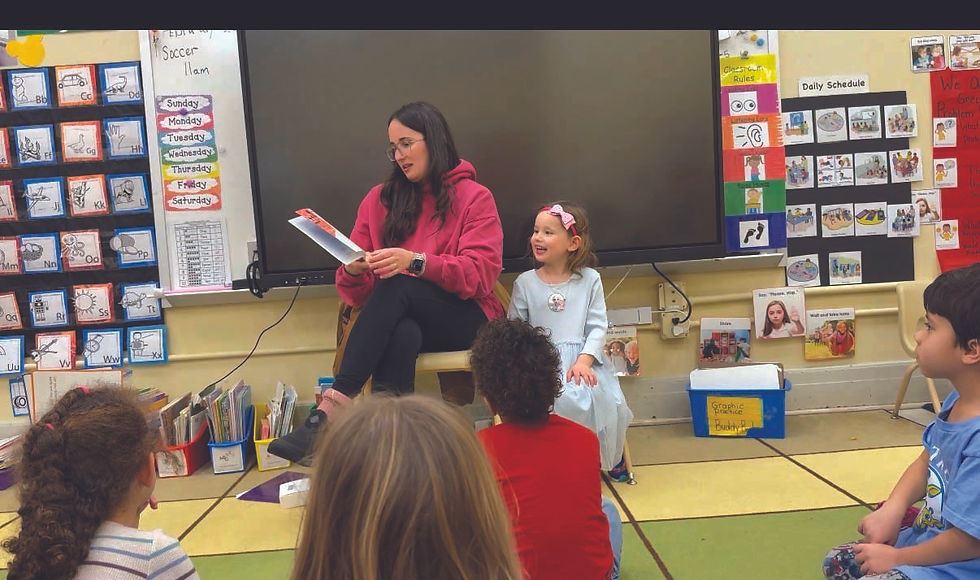
Maplewood resident Carly Haggerty knows exactly what that looks like. Her daughter, Lily, attends Montrose Early Childhood Center.
“Lily skips into her classroom every single day, so happy to go,” Haggerty says. “Montrose is such a warm, welcoming place where the teachers give children the confidence to become more independent and build strong friendships. As a public school teacher in a neighboring district, I know firsthand how difficult and costly early childcare can be, so having access to this program has truly been a game changer for our family.”
Long before Will Meyer became president of the South Orange-Maplewood Board of Education, he was a parent deciding where his daughter would begin her educational journey. She was part of the district’s preschool program, giving him a firsthand look at what early childhood education could mean for a family.
As a father and board president, Meyer has watched Universal Pre-K evolve, serving hundreds of families. “It’s just a tremendous program and gives students a strong start before they head into our elementary schools,” he says.
Meyer sees that same opportunity extending to other families throughout the district. “The entire board strongly supports the Universal Pre-K program by making it available to as many students as possible,” he says. “Especially students who might not otherwise have the means to access private preschool programs.”
Families interested in Universal Pre-K apply through an annual lottery. Parents submit a lottery entry form from January through March. District leaders encourage families to explore the program early, attend open houses and learn about the district’s preschool options before applying.
The most current lottery timeline, eligibility requirements and enrollment information are available on the district website (somsdk12.org and search for “Universal Pre-K”).
Johnson is quick to point out that although Universal Pre-K has changed early childhood education locally, “it was never intended to become the only option for families,” he says. “There is no single path to preparing a child for kindergarten.”

Morrow Memorial Preschool in Maplewood has welcomed children through its doors for more than 50 years. Although the school is not part of the district’s Universal Pre- K network, that decision had little to do with educational philosophy.
Participating would have required significant renovations to the church
building to meet state facility requirements , an investment church leadership ultimately decided not to pursue.
After nearly 20 years as a teacher at Morrow, Margaret Gray knows there’s no such thing as onesize-fits-all when it comes to young children. Now serving as the school’s director, she says the conversation has never been about competing with Universal Pre-K.
“We’ve certainly felt the impact,” Gray says. “Some families have chosen Universal Pre-K instead of paying tuition for private school.”
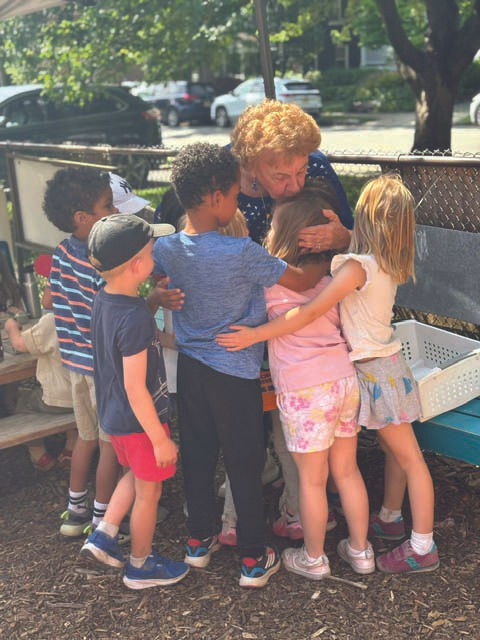
Yet she doesn’t see public and private education as opposing forces. “I see them as different paths toward the same destination,” she says.
On any given morning at Morrow, one child may spend 20 minutes building with blocks while another quietly turns the pages of a favorite book. Gray has learned not to rush those moments.
“Our classrooms are set up for children to learn when they are ready to learn,” she says. That philosophy of child-led, play-based learning has shaped Morrow for more than five decades.
Although Universal Pre-K and private preschool may differ in structure or curriculum, Gray says, “they ultimately share the same goal: helping children grow.”
The district’s work is far from complete. Based on the state’s funding formula, Maplewood and South Orange would ultimately need roughly twice as many preschool seats as it has today. “True universal access would require roughly 1,000 preschool seats,” Meyer says. “Reaching that goal will depend on continued state investment.”
Johnson has learned to measure success differently. “Universal Pre-K has opened doors for more
families, strengthened partnerships across the community and created new opportunities for children to begin their educational journey with confidence,” he says. “But perhaps its greatest impact is a community choosing, together, to prioritize its youngest neighbors.”

Amy Lynn-Cramer is an executive,leadership and career coach and the founder of Cramer Connect, helping individuals and organizations navigate growth, transition and change
with clarity, confidence and purpose.

Comments