


THE STORIES SHE ALMOST DIDN'T TELL
Writing helps author move from fear to courage
By Ellen Donker
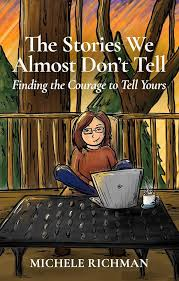
If you ask Michele Richman whether she thought she would ever write a book, her answer is, “Absolutely not. It’s not even something that I felt was possible.”
That mindset started to shift during the pandemic when Richman turned to a coach to help her defeat what she calls imposter syndrome, that voice that says you’re not good enough. Richman is a former practicing attorney who was now working at Lawline, a business that provides online continuing education for lawyers. She is also a mom of two boys, including a special needs child.
Richman felt stuck. “I was like, ‘I want to quit my job. I’m overwhelmed. My kids are home…. I want more,’ ” she says. She knew her fear was in the way of moving forward in life.
Richman’s coach gave her some written prompts to respond to and recommended she begin journaling.

Those writing exercises led Richman on a journey that resulted in the unexpected: She published a book in March called The Stories We Almost Don’t Tell: Finding the Courage to Tell Yours.
In her first reflection, Richman recalls needing to get comfortable living in her house with bats in the attic after the New Jersey Division of Fish and Wildlife told her it was illegal to remove them before springtime. “It was almost like the second I wrote it – what had been a stressful experience – I saw the humor in it,” she says. “It liberated me of the stress and the anxiety I had.” Wanting to share her essay with others, she published it on medium.com in November 2021.
That therapeutic experience fueled her desire to keep writing. “I gave myself a goal of one story a month,” she says. “I did that for two years straight. I just kept doing it until I hit 50 stories.” Along the way, friends and readers cheered her on. They found her stories relatable.
Richman says her writing process often started when she reflected on a memory while she was out for a walk. She’d open her Notes app and write down her memory and what she was feeling. The next day, she says, “I would wake up, go on the deck early in the morning, get my coffee and look at what I wrote in the Notes app. I actually didn’t know what the lesson I learned was until I started writing it.”
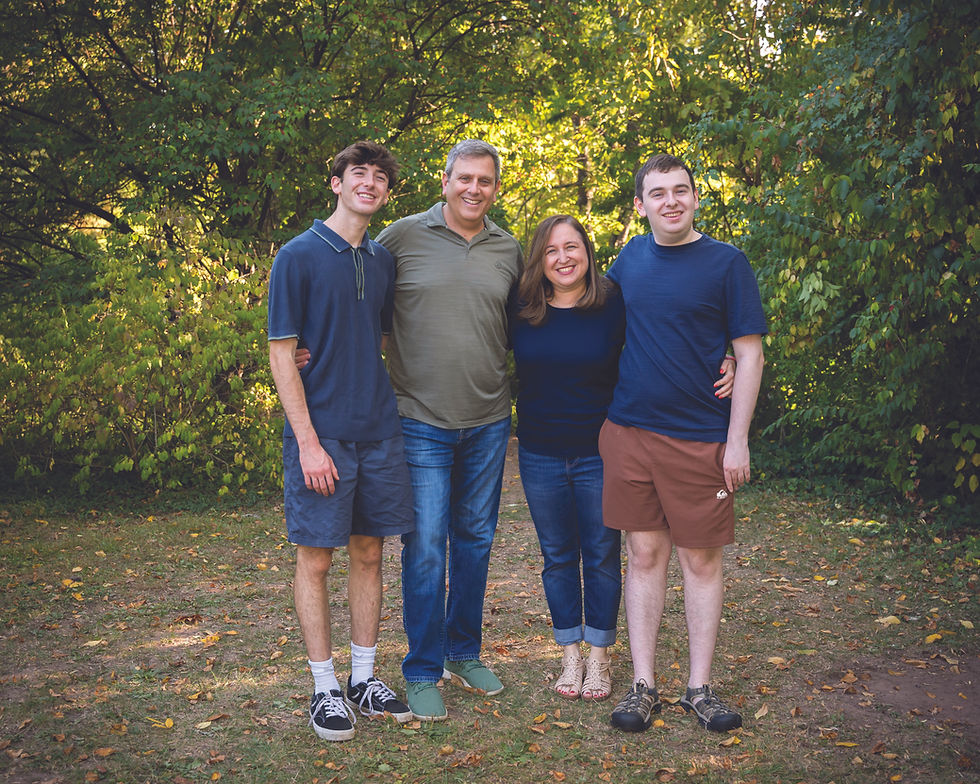
Her family of husband David, sons Max and Eli and her mom were often her first readers. She
would ask them, “What are your thoughts on this experience and how it relates to who I am today?” Those dialogs helped her see the bigger picture.
She says, “The power of writing for me, was [that] I’m redefining these experiences that I thought shaped me one way but actually shaped me another.”
From the beginning, Richman’s friend Deb Joselow from South Orange encouraged her, even
suggesting that Richman publish her own collection of essays. At the time, she had only six months of writing under her belt. It seemed impossible. But three years later, Richman was ready.
At Joselow’s recommendation, she drafted friend and neighbor Heather Kovall to act as editor. Together they laid printouts of every essay on Richman’s dining room table, organizing and culling the pieces to include in the book before sending them to Richman’s professional editor.
The result is what Richman describes as an anthology of stories from her first 50 years. Writing with humor and honesty, she includes topics she had kept hidden away, some for decades: being made to feel different in grade school; facing bullies at summer camp; accepting help from friends during a triathlon competition; advocating for her special needs son; grieving the death of her beloved mother and performing at Listen to Your Mother after avoiding the stage for 40 years.
“There’s so many things people can relate to,” Richman says, “whether it’s struggling as a woman, balancing parenting, being a professional in the workforce, having special needs kids, having to advocate for them, dealing with grief.”
Writing and living out the insights Richman gleaned from her coach enabled her to start asking for what she wanted and embrace new opportunities, even if they made her feel uncomfortable. It’s how she summoned the courage to ask for a new position at work. She now serves as the chief
people officer and lead coach at Lawline.
Richman also started her own coaching practice, Michele Richman Coaching, to help women navigate major life and career transitions. And she is no longer terrified when she has to speak at large conferences, although she admits to butterflies.
But butterflies are natural. “That was such a key point when my coach had said to me, ‘Your fear is not going to go away,’ ” Richman says. “ ‘You just have to push past it .… We’re always going to feel our anxiety, but it doesn’t mean it has to control us. You just have to acknowledge it.’ ”
Richman hopes her example of turning fear into action inspires her readers and her sons to do the same. After all, she found the courage to write and promote a book. And now she’s thinking about a new one: The Stories We Almost Don’t Tell About Growing a Business, focused on what it took to make Lawline successful.
To learn more about The Stories We Almost Don’t Tell: Finding the Courage to Tell Yours, go to michelerichman.com. The book is available at Words Bookstore and amazon.com.
Ellen Donker found that the book reminded her of the many untold stories she can mine for her Heart of the Matter column.


Comments